Hiranya
About the Artist
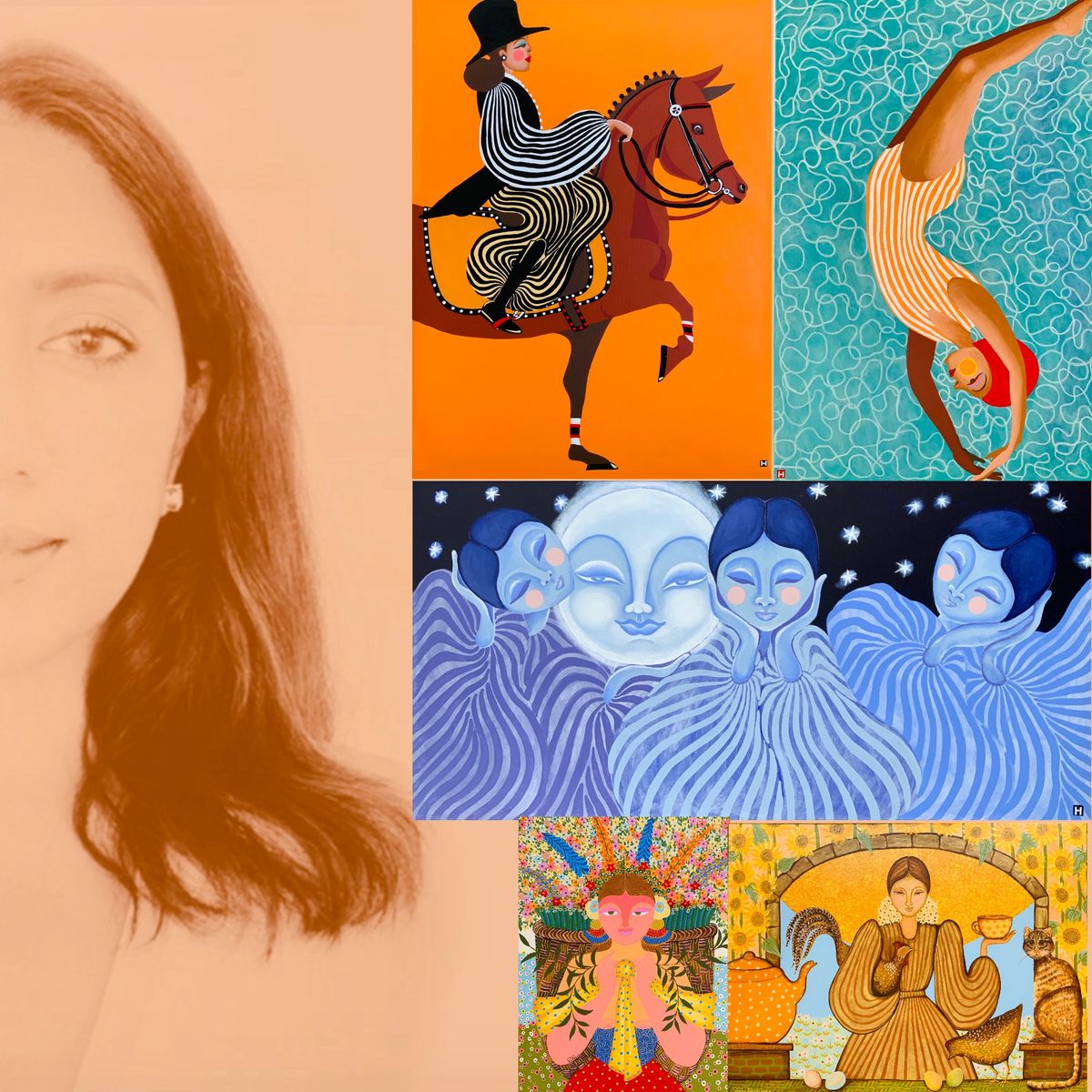
Hiranya is a classical figurative artist based in Brisbane, Australia. She exclusively produces works derived from memories and experiences through various reflexions of today’s social, cultural and economic ambience.
She is currently producing her ongoing abstract portraiture series 'Tearoom' which has started as a personal fascination for culture and flavour, but eventually moved to a level of inspirations by the fluidity of the body movements. Vibrant stripe patterns on the subject's outfit is a key focus point. starting from simpler-minimal story to sophisticated tales with artist's personal favourites; colourful tea cups and tea pots, and all other details come with it.
Each work takes its own significant time to finish based on the amount of details going in. The beauty of every aspect and little details of each work is extremely important to the artist. Hence they are carefully realised. The stories the artist wishes to discuss, sustain their own historical and artistic values.
Growing up in an environment which was diversely influenced by ethnic values, made her realise that womanhood plays a significant role in actualising any story. With this mindfulness, her narrative figure becomes an independent female identity who establishes a healing space for her existence. This subject is maybe a hybridised form of a being who represents power, beauty, fragility, sexuality and vulnerability.
In a world with a manufactured happiness where everything is valued by materialistic worth, the artist explores real human connections, emotions and devotions which are withering away. Focusing on this very thought, she believes her female protagonist has become a creator of a profound human connection and a communicator of emotions. The imagery she uses, show a strong influence from the ancient Indo-Aryan painting techniques which she studied in detail and the classical figure studies found in cave temples, frescoes and monastery walls where she grew up. Bold colours and symbolism are a focus point. It maybe a direct reflection of her training in local art school and the ethnic environment she was exposed to.